fatigue
Fatigue is a pervasive and transformative state in The Fall, experienced by Jean-Baptiste Clamence as both a physical ailment and a psychological condition that marks the decline of his former vitality and the onset of his moral crisis. It is not merely a symptom but a central force that reshapes his existence, leading him from a life of effortless superiority to one of debauchery, illness, and ultimately, his adopted role as a judge-penitent.
Physical and Psychological Onset
Clamence's fatigue first emerges as a vague, creeping malaise that undermines his once-unshakeable harmony with life. After the mysterious laugh on the Pont des Arts, he experiences a "sort of difficulty in recovering my good spirits" and consults doctors who give him stimulants, leaving him "alternately stimulated and depressed." This physical dejection is inseparable from a psychological languor: "when the body is sad the heart languishes." The fatigue signals the beginning of a profound unlearning, as Clamence feels he is "half unlearning what I had never learned and yet knew so well—how to live." It is a state that corrodes his former identity, making him feel vulnerable and open to public accusation, and it is during this period that he first senses the hidden smiles and judgments of others.
The Collapse of Vitality and the Turn to Debauchery
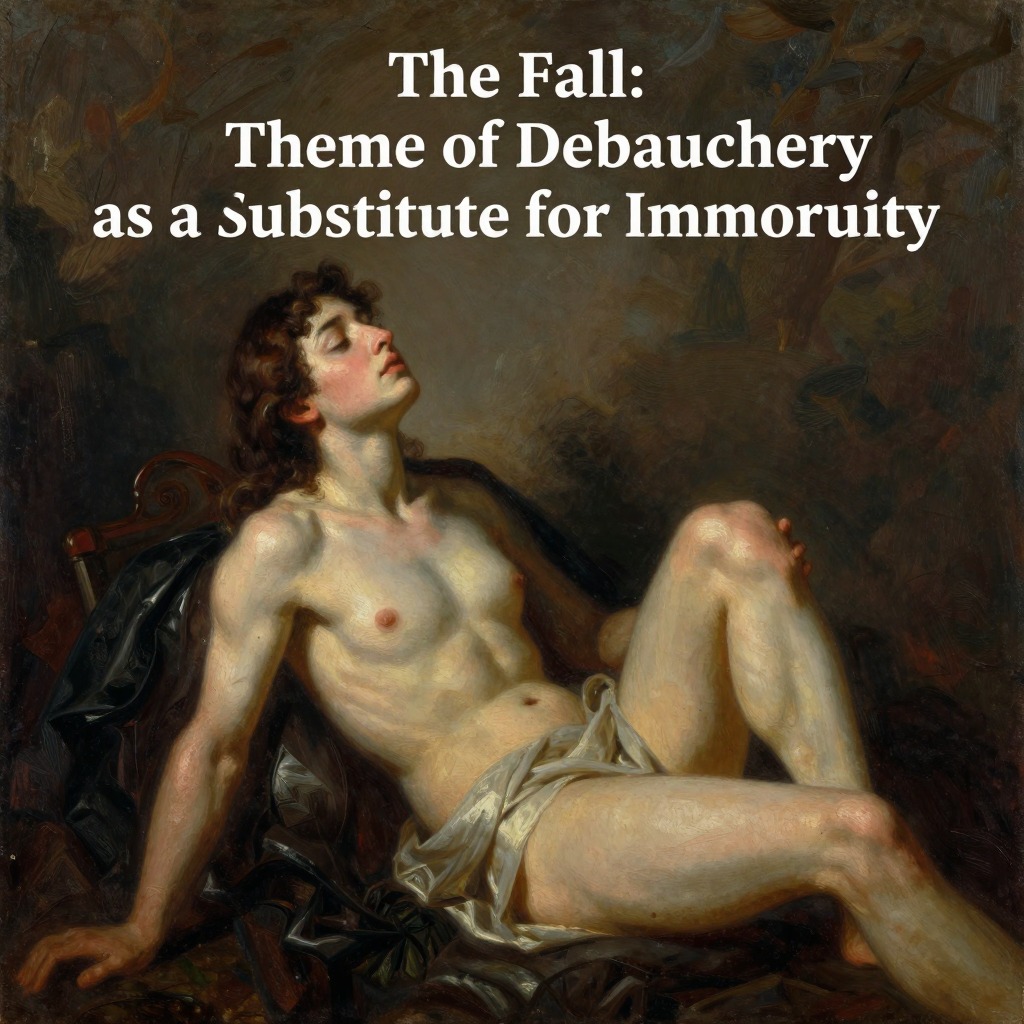
As his fatigue deepens, Clamence's physical and mental powers wane, leading him to abandon his former heights of success and adopt a life of debauchery. The exhaustion that gnaws at his body becomes a paradoxical cure, cauterizing his emotional rawness: "Each excess decreases vitality, hence suffering." He immerses himself in a fog of alcohol and women, finding in this dissipation a temporary liberation from the laughter that haunts him. The fatigue from his nocturnal exploits eventually becomes so severe that he cannot even sustain this lifestyle: "One plays at being immortal and after a few weeks one doesn't even know whether or not one can hang on till the next day." His liver fails, and a "fatigue so dreadful" settles in, one that never fully leaves him. This physical collapse forces him to give up his debauchery, leaving him in a state of numb indifference where he "peacefully died of my cure."
The Encounter with the Drowning Woman and the Weight of Memory
Fatigue is also the decisive factor in Clamence's most damning moral failure. On the Pont Royal, when he hears the body of a young woman strike the water and her subsequent cries, he is paralyzed by an "irresistible weakness" that steals over him. He stands motionless, trembling from cold and shock, and tells himself "Too late, too far..." before slowly walking away without informing anyone. This physical and emotional exhaustion—the inability to act at the crucial moment—becomes the foundational wound of his guilt. The memory of this event, and the cry that followed, returns to him years later on an ocean liner, where the sight of a black speck on the water makes his heart beat wildly and confirms that he is "still cornered." The fatigue of that night is not a one-time lapse but a recurring burden that he must carry and eventually confess.
The Little-Ease and the Burden of Continued Existence
Clamence explicitly links his state of fatigue to the medieval dungeon cell called the "little-ease," a space too low to stand in and too narrow to lie down in, forcing its occupant to "live on the diagonal." This cell becomes a metaphor for his own condition: a constant, unchanging restriction that stiffens the body and teaches the condemned man that he is guilty. As a former "frequenter of summits and upper decks," Clamence finds this confinement unbearable. The fatigue of this existence—the sheer effort of continuing—is described as superhuman. He speaks of a time when he "didn't at any minute have the slightest idea how I could reach the next one," and he identifies with Christ's agony, seeing in it the same struggle to carry on. This exhaustion is not just physical but existential, a weariness with the weight of days, freedom, and the judgment of others.
The Judge-Penitent's Exhaustion and Final Confession
In his final conversation with his interlocutor, Clamence is bedridden with a fever, which he treats with gin. He is "strangely tired, not from having talked so much but at the mere thought of what I still have to say." His fatigue is now a permanent feature of his identity, a state he manages through his role as a judge-penitent. He admits that his solution is "not the ideal" and that he sometimes doubts, but he finds comfort in his duplicity. The fatigue that once signaled his downfall now becomes the foundation of his new, albeit compromised, happiness. He is an "empty prophet for shabby times, Elijah without a messiah, choked with fever and alcohol," a figure whose exhaustion is both his punishment and his platform for judging others. The novel ends with him still in this state, awaiting his interlocutor's return, his fatigue a constant reminder of the fall he can never escape.